
Tools and Equipment for Starting Container Figs | Essential Items vs. Later Additions
Updated: 2026-10-17
When starting to grow figs in containers, purchasing tools all at once from garden centers or online retailers can create confusion about what is actually necessary. In practice, few items are required on planting day. This article organizes essential items into categories: those needed on planting day, those needed during the first growing season, those useful by winter, and those sufficient to acquire after fruiting begins.
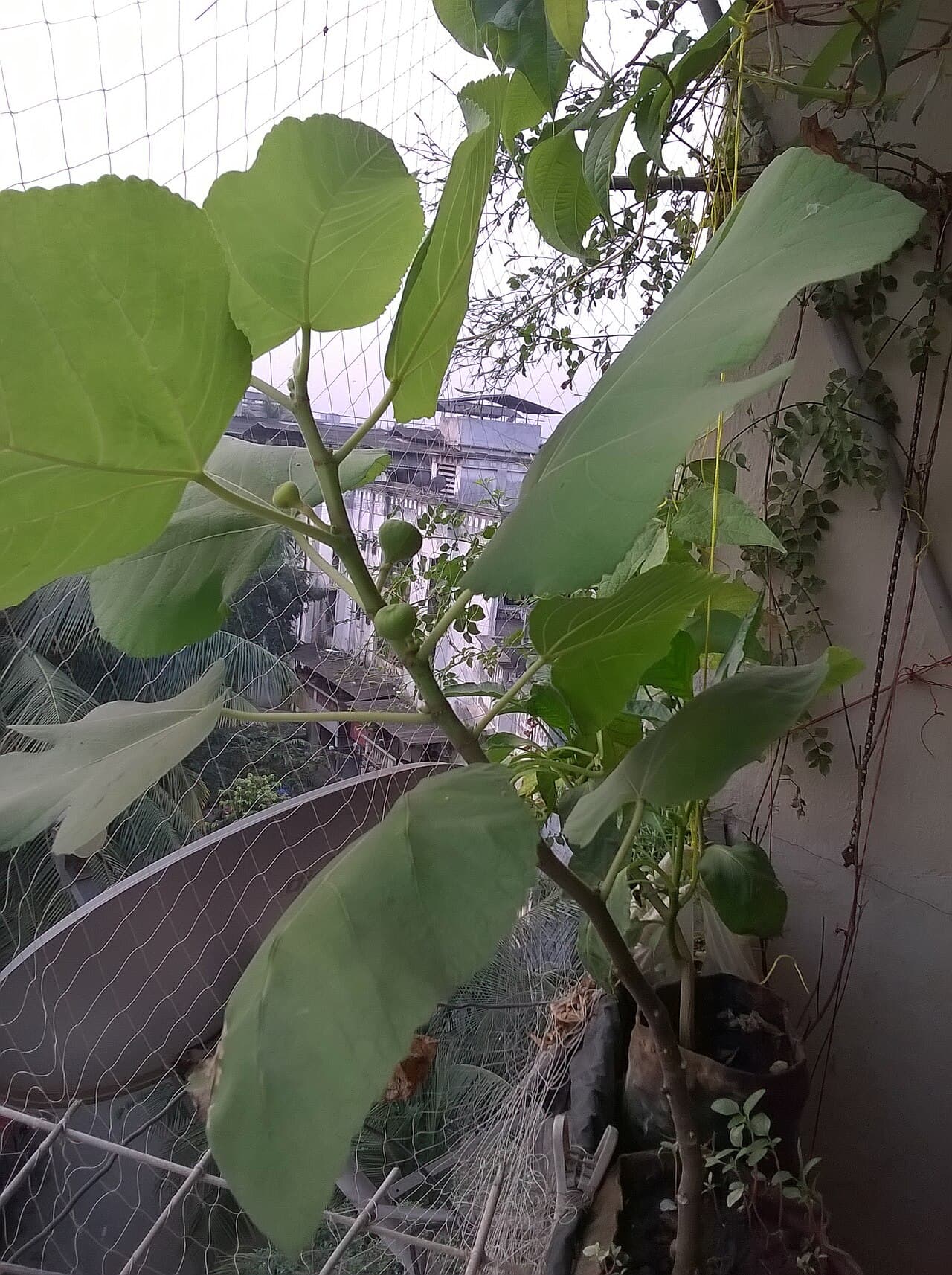
Things Needed on Planting Day
Container
Select a pot to match the size of the sapling. For a purchased sapling, a pot one to two sizes larger than the container it came in serves as a guideline. Planting in an oversized pot from the start results in abundant soil relative to few roots, which prevents drying and creates conditions for root rot. At the mature, fruit-bearing stage, 8–10 号 (24–30 cm diameter) or larger is the standard, so increase the pot size with each repotting. Differences by material are summarized in Pot Size Selection.
Soil
Figs prefer soil with good drainage. A combination using red volcanic soil as the base, amended with pumice or similar material to enhance drainage and aeration, is a practical mix. Commercial fruit tree potting soil can be used directly as well. For guidance on soil composition and mixing recipes, refer to Soil Selection and Mixing Recipes.
Drainage Screen and Base Fertilizer
Place a pot screen over the drainage hole to prevent soil from washing out and insects from entering. At planting time, mix a slow-release fertilizer into the soil as a base fertilizer to supply nutrients while roots establish. Mix the fertilizer thoroughly into the soil before planting to prevent direct contact with roots.
Essential Items for the First Growing Season
Container-grown figs require less soil than in-ground plantings, making regular watering essential from spring through summer. During peak summer, watering twice daily—morning and evening—may be necessary. Since this becomes a daily task, a watering can with good capacity and a comfortable pour makes the work easier.
Young trees have thin trunks that become unstable when moved by wind, preventing roots from settling properly. Staking immediately after planting provides support. Drive a single stake and tie the trunk loosely with a figure-eight knot, leaving enough give so the stake does not cut into the bark.
Things to have by winter
Fig pruning is performed primarily from December to February when leaves have fallen. Even on first-year nursery plants, pruning shears are used to cut back excessively long branches and remove dead wood. Dull shears crush branch cut surfaces, so maintaining a quality garden pruning saw ensures extended use. For detailed information, see Pruning Basics.
In cold regions or areas where severe winter cold waves occur, non-woven frost protection fabric that wraps the entire potted plant can help mitigate cold wind and frost damage. In warmer areas where the plant can be moved under an eave, winter survival is often possible without this protection.
Delay until fruiting has begun.
When the fruit begins to color, birds will gather to target ripening figs. Once harvest begins, bird netting that covers the entire plant can significantly reduce damage. For container-grown figs with few fruits, individual fruit bags can also be used for protection.
Things That Can Wait
- Watering timer: suitable for those who travel frequently or are away during summer and cannot water on certain days.
- Refractometer and calipers: consider obtaining these once the desire arises to record and compare sweetness and size by variety.
- Vigor products: Apply after repotting or when the plant shows signs of weakening.
The assembled tools are also compiled in the tool list. If the variety of the fig tree being grown is unknown, comparison using the variety guide or consultation on the message board with photographs is recommended.
Container-grown figs can be planted with a pot, potting soil, pot drainage mesh, and base fertilizer. Watering and staking are needed in the first season, pruning shears and frost protection by winter, and bird netting once fruiting begins. Gathering supplies in order of necessity allows a start without unnecessary purchases.
Not sure what your fig is?
Post a photo of the leaves and fruit and see what other growers think. "Maybe" is a perfectly good answer here.
Post your figNot going the way you hoped?
Ask other growers on the board. A photo gets you a faster answer.