
Fig Pruning Methods and Timing | How to Cut Summer and Fall Figs Differently
Updated: 2026-07-13
Fig pruning often raises uncertainty about how much to cut, but the correct approach depends on the variety type. Some trees tolerate heavy cutback, while others produce fewer figs if pruned too severely. The key distinction lies in the difference between "breba crop" and "main crop." This article systematically covers how pruning practices differ between uniferous types (main crop only) and biferous types (breba crop + main crop), including timing, cutback severity, and tree form.
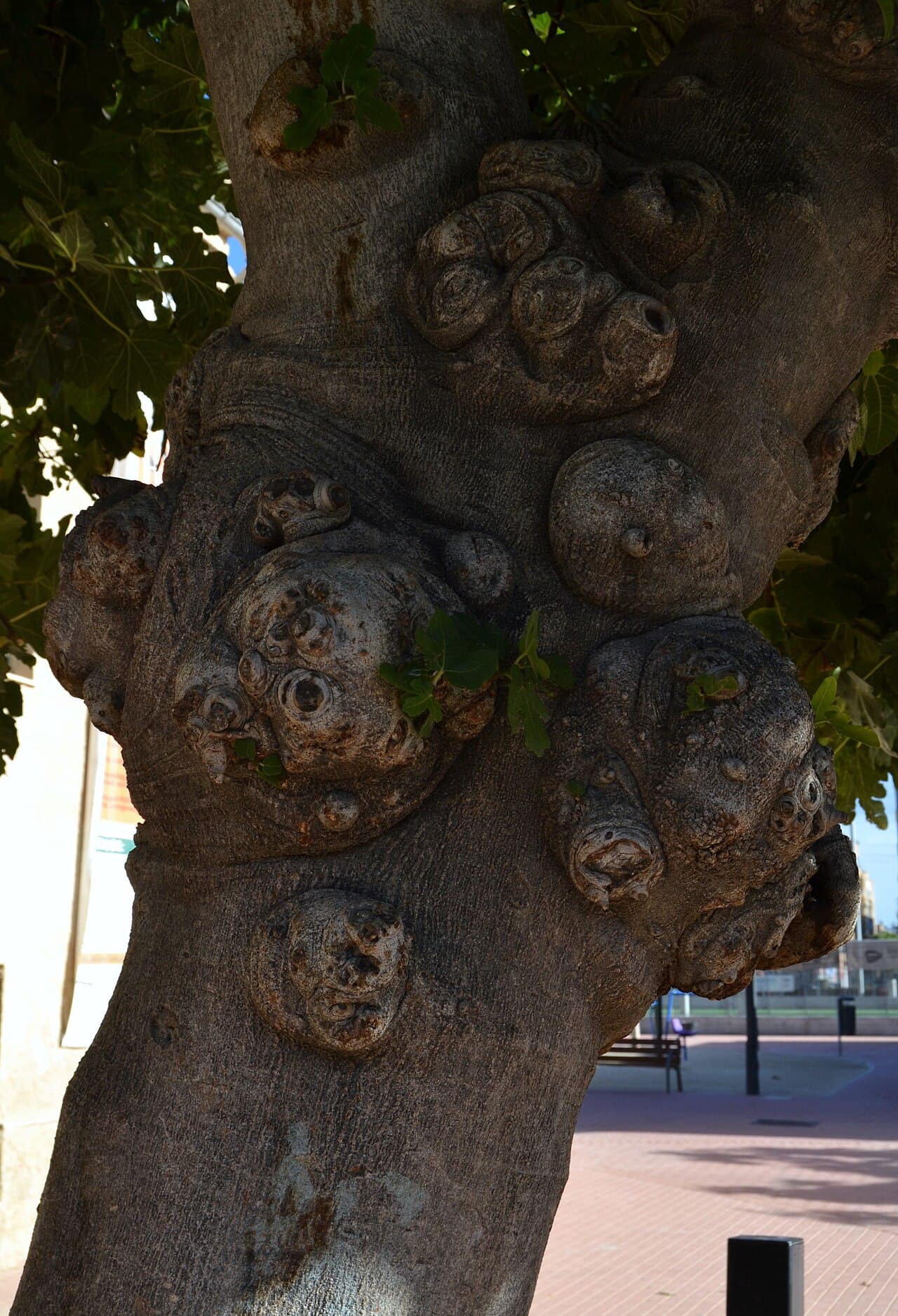
Understanding where fruit sets reveals nine-tenths of pruning principles.
Fig fruit forms at different locations on the branch depending on whether it is a breba crop or main crop. Understanding this distinction makes it clear which branches can be pruned and which should be retained.
- Breba crop: Develops at the nodes of branches that grew the previous year (old wood/previous year's growth) and ripens in early summer through July. The quantity is small, but fruit tends to be large.
- Breba crop (秋果): Fruit that develops on new shoots (current-year growth) and ripens around August to October. These are produced in greater numbers and typically form the main harvest.
In other words, the buds for summer figs remain on the previous year's branches through winter. If the old branches are cut back severely in winter, the summer figs are removed along with them—this is the primary reason pruning methods differ for figs.
Single-crop (breba-less) varieties can be cut back heavily.
Uniferous varieties that produce only breba-less figs bear fruit on current-season wood. Even if previous-season branches are cut back severely, fruit develops on the new shoots that emerge in spring, so the harvest is not reduced. Rather, the advantage lies in branch renewal through pruning, allowing the tree to be maintained in a compact form.
- Cut back the previous year's growth, leaving 1 to 3 buds. Figs are also well-suited to container cultivation.
- Even if branch tips suffer cold damage in cold regions, recovery is straightforward since pruning back is anticipated.
Biolette Solliers, Ronde de Bordeaux, and Violette de Bordeaux are known as types that produce primarily fall figs.
For breba and main crop varieties, determine which branches to retain.
For biferous varieties that produce both breba and main crop figs, the key decision is whether to retain the previous year's branches that bear breba buds. To harvest breba crop, use light pruning that leaves well-ripened one-year-old wood longer, taking care not to cut back the branch tips excessively. Conversely, if main crop is prioritized with more severe cutback pruning, breba production will decrease, but the tree will remain more compact.
- To harvest breba crop as well: Thin out primarily, leaving several vigorous one-year-old canes longer.
- Fall crop priority/space-saving: Cut back old wood short and produce new shoots annually.
日本で普及する桝井ドーフィンやとよみつひめ、ブラウン・ターキー、ホワイト・ゼノアは夏秋兼用タイプ。なおデザート・キングのように、栽培上は夏果が中心で旧枝を切り詰めない方がよいタイプもあるので、品種の性質を確認してから切りましょう。
Prune during the period from leaf fall through bud break.
Prune during the dormant period from December to February, after leaves have fallen. Once sap begins to flow, cut surfaces will weep sap readily, so pruning should be completed before buds swell. In areas with severe winters, pruning during midwinter can damage branches from cold injury; pruning in late February to early March is safer.
- Winter (dormant season): Primary period for shaping the tree, cutting back, and thinning.
- During the growing season (around June–July): Pinching back new shoots at 5–6 leaves helps ensure well-developed breba crop and prevents excessive branching.
- Crowded branches, excessively vigorous shoots, and dead branches may be removed at any time as needed.
Choose the tree form based on intended purpose.
- Open-center natural form (cup-shaped framework): Several main branches trained to grow outward. Provides good sunlight exposure and accessibility for work in garden planting.
- Single-cordon training: The main branch is trained horizontally to the left and right. This is a standard training method used in management aimed at fall fruit on dual-cropping varieties.
- Container growing/compact training: based on annual pruning. Works well with uniferous (breba crop-only) varieties.
When the tree type is unknown
Whether a tree produces fruit once or twice per year affects pruning decisions, so clarity on this point is essential. Begin by confirming the variety name, then check its type and fruiting pattern. For trees with lost labels or unidentified varieties, consulting with a photo is the most direct approach.
- Refer to Variety Guide to confirm the characteristics and lineage of each cultivar.
- For questions about unidentified trees or cultivar identification, consult the message board.
Fig pruning becomes manageable once the fruiting sites are understood: summer crop forms on previous-year wood, and autumn crop forms on current-year wood. For single-crop varieties, prune back heavily. For dual-crop varieties, decide whether to retain summer-crop wood or redirect growth toward the autumn crop. Pruning timing should follow the dormant season as a general rule, with severe-climate regions avoiding the coldest part of winter. Adjust the pruning approach to match the variety type, and build consistent annual harvests without overextending the plant.
Related varieties
Not going the way you hoped?
Ask other growers on the board. A photo gets you a faster answer.
This article was drafted with AI assistance and reviewed by the site operator. Variety details are for reference—please confirm identification through discussion on the board.
Reply0
Login required