
How to Choose a Fig Planting Location | Tips for Success with Aspect, Distance, and Drainage
Updated: 2026-09-06
Figs are relatively easy-to-grow fruit trees, but when planted in the ground, they establish roots and remain in place for decades. Choosing a location carefully—considering not only sunlight and air circulation, but also distance from structures and pipes, as well as drainage—prevents later difficulties with transplanting. This article outlines the key points to check when selecting a planting location for ground-planted figs.
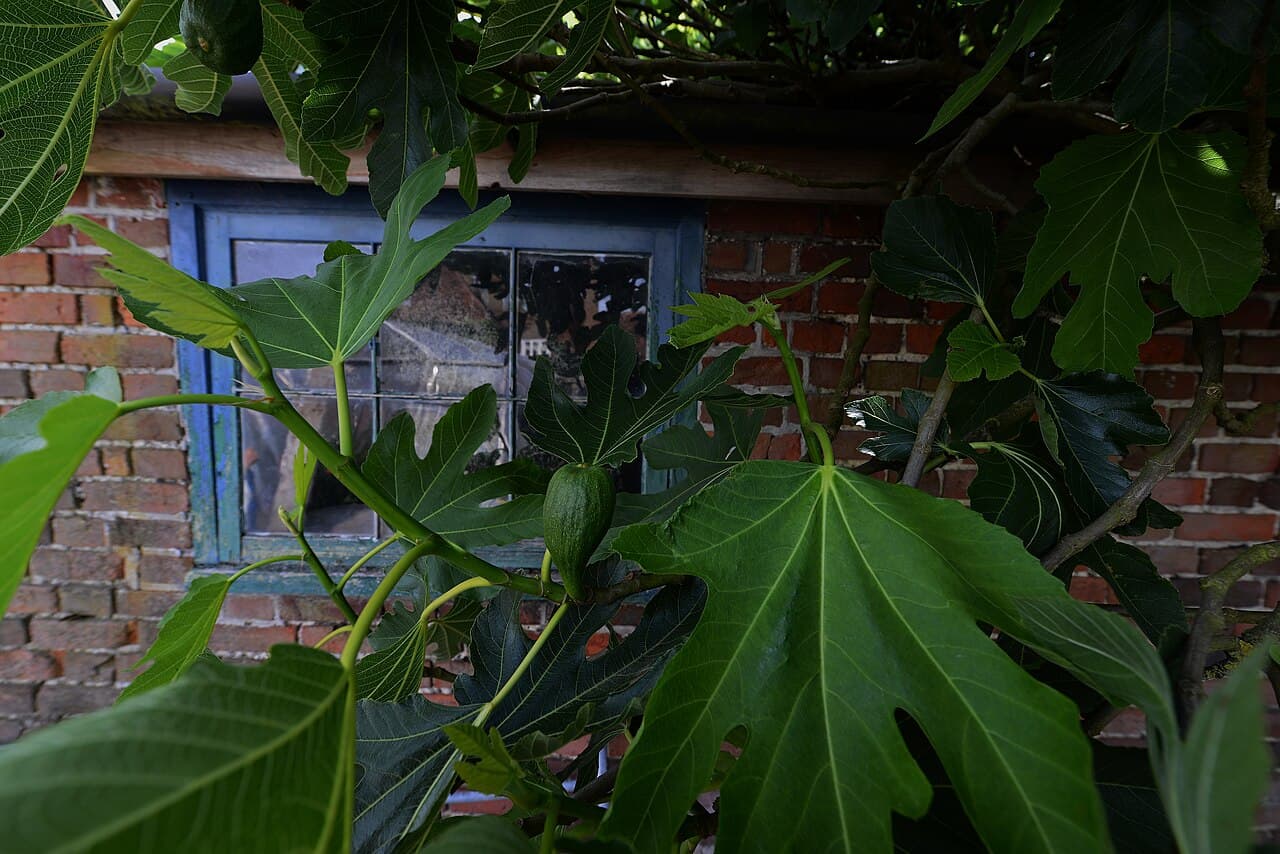
Sunlight and Exposure
Figs are sun-loving fruit trees that thrive with at least 6 hours of direct sunlight daily. Select a south-facing or east-facing location where the plant receives strong morning sun; this ensures stable sugar content and consistent fruit production. Areas on the north side of buildings or in the shadow of tall fences result in poor growth and delayed fruit ripening. When existing trees or tall structures are present, account for how shadow patterns shift between the summer and winter solstices, and choose a position that maintains adequate sunlight throughout the year.
Distance from buildings and property lines
Mature fig trees reach 2–4 m in height with a branch spread of similar extent. Plant at least 1 m away from walls and eaves, preferably around 2 m, to prevent branches from touching the building structure, causing damage, or soiling gutters and exterior walls. Proximity to property lines can lead to disputes from fallen leaves and fruit, or branches crossing into neighboring properties. Position the tree at a sufficient distance from the boundary, accounting for its mature size, to avoid such conflicts.
Root Spread and Pipes/Septic Systems
Fig roots spread widely and shallowly in a horizontal direction. Near water and drainage pipes, septic tanks, or concrete foundations, roots may penetrate pipe joints and cause blockages. Consider positioning the tree at least 2 meters away from pipes and septic tanks, or install a root barrier to prevent root intrusion.
Drainage and Soil Assessment
Figs are susceptible to excessive moisture, and root rot occurs readily in poorly drained lowlands or clay soils. Before planting, a simple drainage check—digging a hole, filling it with water, and observing whether it drains within several hours—is effective. If drainage is poor, consider raising the planting bed into a mound, replacing the soil with well-draining medium, or switching to container cultivation.
Planting Checklist
- A location that receives at least 6 hours of direct sunlight daily.
- Positioned at least 1–2 meters away from walls, eaves, and property lines.
- Distance from water pipes, sewage systems, septic tanks, and concrete foundations
- Check drainage and ensure the location is not a low-lying area or excessively clay soil.
- Whether the location is not exposed to strong winds, or if necessary, can be supported with stakes for reinforcement.
Since the planting location cannot be easily changed once decided, consulting the gardens of growers currently cultivating figs can provide helpful guidance. Searching the variety guide for cultivation examples in similar environments or sharing photos of the intended planting site on the forum for consultation makes it easier to obtain practical advice. When uncertain about variety selection, options such as the easy-to-grow Masui Dauphine or the cold-hardy Chicago Hardy are also worth considering.
Not sure what your fig is?
Post a photo of the leaves and fruit and see what other growers think. "Maybe" is a perfectly good answer here.
Post your figRelated varieties
Not going the way you hoped?
Ask other growers on the board. A photo gets you a faster answer.