How to Grow Fig Cuttings and Air-Layered Seedlings Successfully in Year One | Watering, Fertilizing, and Overwintering After Potting Up
Updated: 2026-09-18
Even after successfully achieving rooting through cuttings or air layering, inattention during the subsequent period can result in seedling death. Newly rooted seedlings remain in an unstable condition with sparse root systems, vulnerable to both drought and excess fertilizer. After potting up seedlings obtained through cuttings or air layering, establishing proper first-year care determines success for subsequent in-ground planting or pot upsizing in later years. The seasonal management points for this critical first year are outlined below.
Recognize that immediately after potting up, roots are still in the early stages of development.
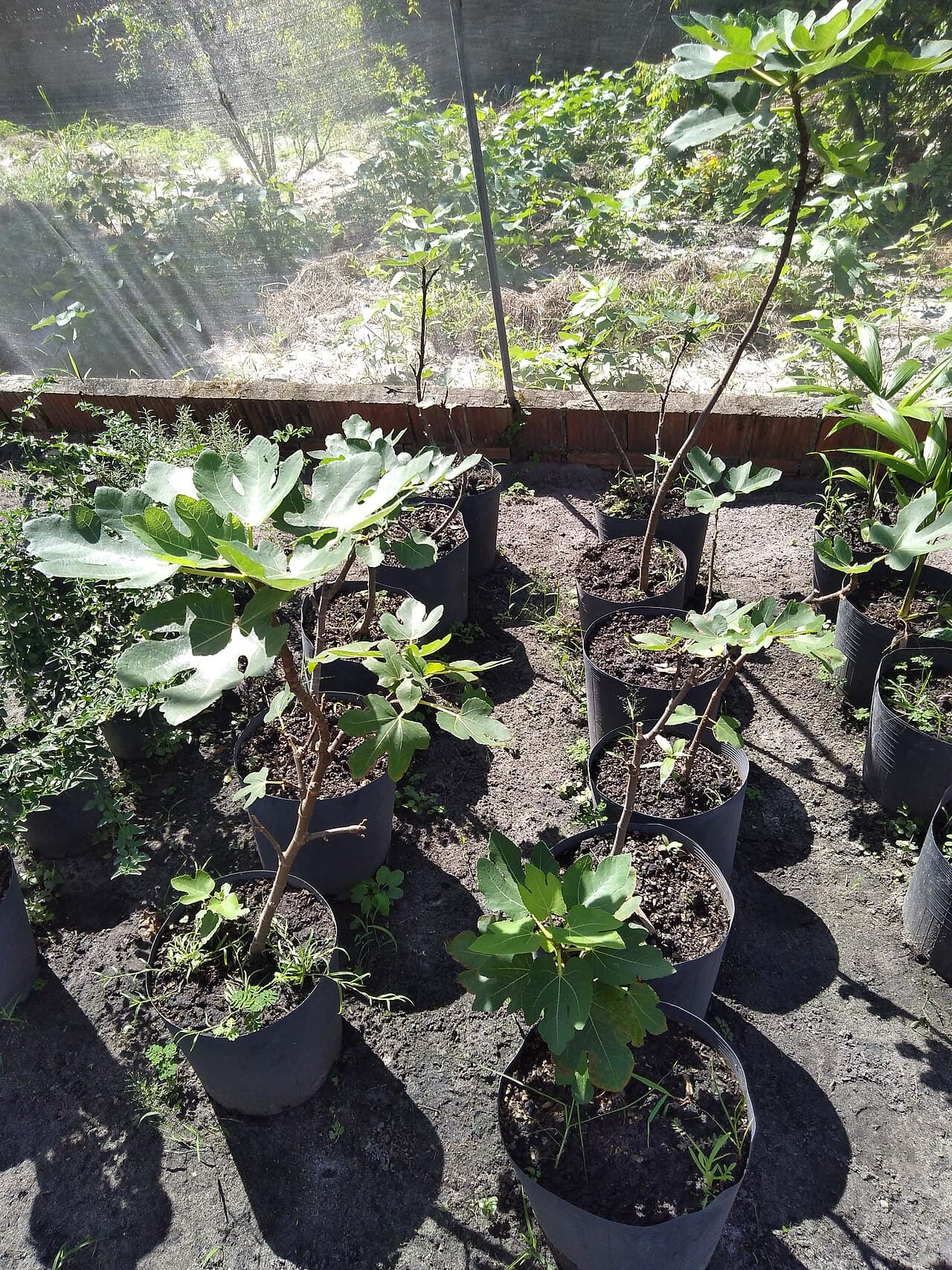
Seedlings recently potted up with roots extended just a few centimeters have less root mass than their appearance suggests and possess weak water absorption capacity. Even as new shoots begin to emerge above ground, the roots have not yet caught up with their growth. During this period, exposure to direct sunlight or strong wind causes water loss from the leaves to outpace the roots' ability to supply moisture, leading to wilting and leaf drop. For 1–2 weeks after potting up, condition the seedlings in bright, dappled shade. Once new shoots begin extending steadily, gradually acclimate them to full sun.
Adjust watering and location by season.
Small pots contain less soil and therefore dry out faster than larger containers with mature plants. During the growing season from spring through autumn, water thoroughly when the soil surface becomes dry. In midsummer, watering twice daily—morning and evening—may be necessary. Conversely, figs are sensitive to excessive moisture, so avoid leaving water standing in saucers. Throughout the growing season, place the plant in partial shade to bright indirect light, avoiding direct sun, to prevent leaf scorch.
Apply fertilizer sparingly, and do not begin feeding prematurely.
Newly formed roots are highly sensitive to changes in fertilizer concentration, and concentrated liquid fertilizer or excessive slow-release fertilizer can damage them. For the first one to two months after potting, until new growth is established and leaf count increases, apply no fertilizer or use liquid fertilizer diluted below the recommended strength at approximately once per month. Once growth stabilizes, introduce slow-release fertilizer starting at approximately half the recommended rate and gradually increase the amount. See fertilizer selection for additional guidance.
Timing of Potting Up and Soil Mix
Signs that repotting is needed include roots becoming visible through drainage holes or the soil surface drying quickly after each watering. In the first year, increase pot size one to two sizes at a time—for example, from a 3-pot to a 4-pot to a 5-pot. Transplanting directly into a large container can result in areas of soil where roots have not yet spread, causing excess moisture and increasing the risk of root rot. Use well-draining potting soil mixed with akadama or leaf mold, and select a formulation that is not excessively high in nutrients.
Establish the basic tree form through training and pinching.
First-year fig saplings have thin, fragile branches that are prone to toppling. Support with stakes and tie-down techniques prevent breakage. Once the main stem reaches adequate height, pinch out the terminal bud to encourage branching. This expands the available options for training methods in subsequent years. Extensive formal pruning is unnecessary at this stage; focus instead on establishing the basic framework of the tree structure.
First winter dormancy requires particular care.
First-year saplings have shallow roots and lack the cold hardiness of mature trees. Depending on the region, it is prudent to move the pot to a sheltered location such as under an eave or indoors near a window away from cold winds during the first winter, or to cover the base of the plant with mulch or nonwoven fabric for insulation. Refer to Winter Protection and Cold Hardiness and provide protection without subjecting the plant to undue stress.
In the first year of propagation from cuttings or air layering, the priority is not merely achieving root formation but rather "sustaining the seedling stage without killing the plant." By avoiding excessive stress in watering, fertilization, potting up, and winter hardening, and gradually enlarging the stock, the plant will develop sufficiently by the second year onward to consider transition to ground planting or larger containers. When uncertain about cultivation methods, consult the discussion board or verify the parent plant's variety in the variety guide while nurturing the plant with patience.
Not sure what your fig is?
Post a photo of the leaves and fruit and see what other growers think. "Maybe" is a perfectly good answer here.
Post your figNot going the way you hoped?
Ask other growers on the board. A photo gets you a faster answer.