Growing Figs from Seed | Can You Collect Seeds? Germination Steps and Precautions
Updated: 2026-07-28
Figs are typically propagated by cuttings or air layering, though growing from seed (generative propagation) has its own distinct appeal. Unlike cuttings, seed propagation presents preliminary considerations—namely whether seeds can be obtained at all—and the important caveat that seedlings will not necessarily produce fruit identical to the parent plant. This article outlines the mechanics of seed propagation, germination procedures, and key points to observe.
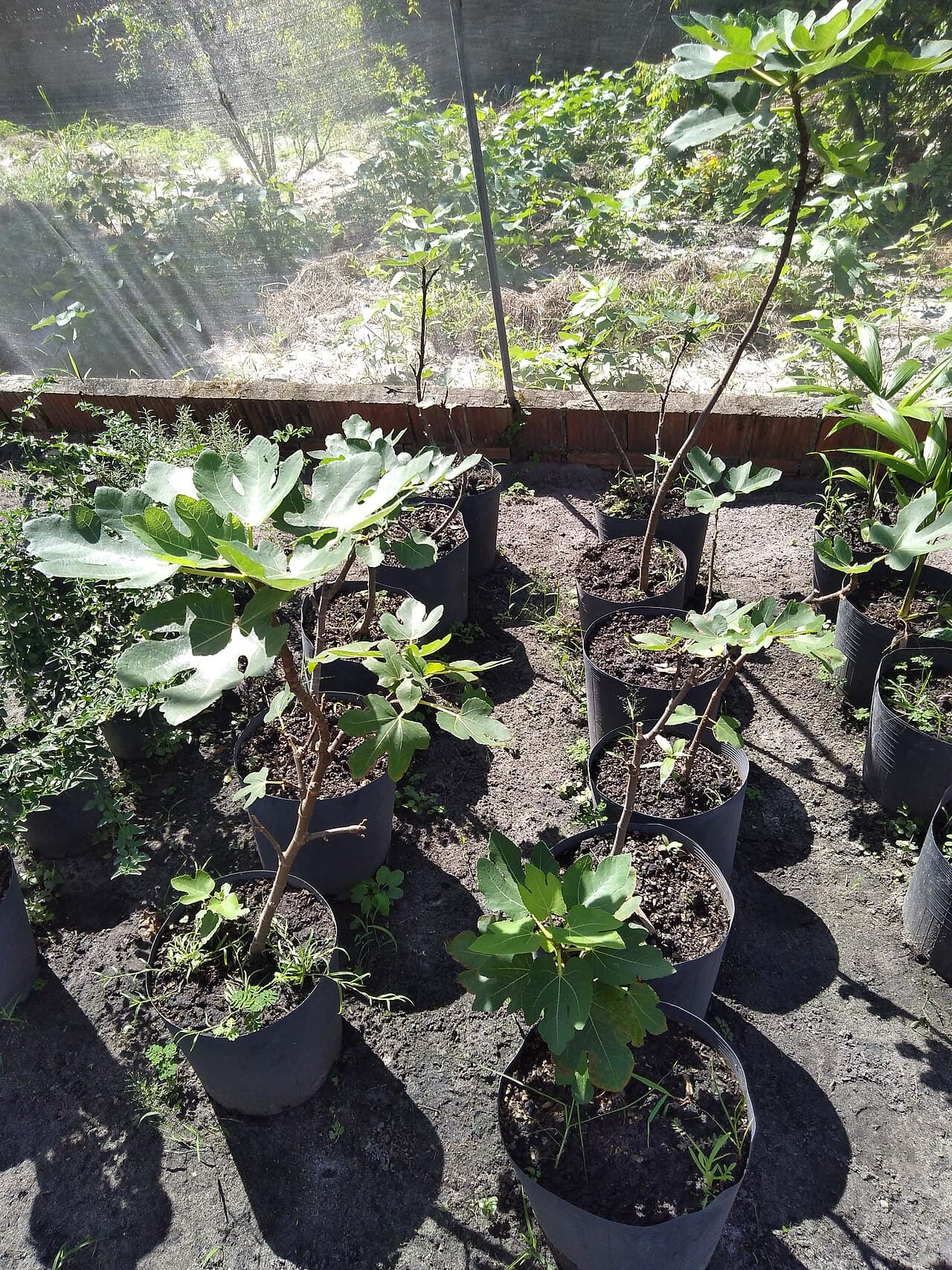
The small seeds visible in commercial fruit are not necessarily true seeds.
The small granular particles found inside fig fruit are in most cases unfertilized ovules rather than viable seeds. Many fig varieties exhibit parthenocarpy, a condition in which fruit develops without pollination. As a result, seeds from fruit commonly harvested in Japanese home gardens and fields will rarely germinate, even when sown at the appropriate time.
To obtain viable seeds that will germinate, varieties such as Smyrna that require pollination by the fig wasp (caprification) must actually be pollinated by the wasp. Since this wasp does not naturally inhabit Japan, seeds cannot practically be obtained from home garden trees. Imported dried figs or fruit obtained from some enthusiasts who maintain fig wasp colonies may contain seeds capable of germination.
Seed Sowing and Germination Management
- Extract the pulp and seeds from the fruit, rub them apart in water, strain through a fine sieve, and rinse away the pulp.
- Rinse the seeds and dry lightly in shade (avoid complete desiccation).
- Sow thinly on the surface of clean seed-starting medium (such as peat moss mixed with vermiculite), and cover with a very thin layer of soil.
- Maintain moisture with misting, keeping the plant in a warm location between 25–28°C.
- Germination typically takes 2–4 weeks.
After germination, once the seedling has developed 2 to 3 true leaves, transplant into a small pot and gradually acclimate to sunlight in the same manner as regular seedlings.
Considerations for Seed-Grown Figs
- Seedlings will not match the parent plant: Since fig varieties can only be maintained through cuttings, plants grown from seed are genetically distinct from the parent—essentially new individuals.
- Takes years to reach fruiting: seedlings grow more slowly than cuttings and typically require several years before producing fruit for the first time.
- Unproductive plants may occur: Although cultivated varieties are predominantly female types, seedlings can sometimes express the characteristics of pollinator trees with inedible fruit (caprifig types). Several years of growth may be needed to distinguish productive from unproductive plants.
How to Enjoy Growing Figs from Seed
Seedlings lack the consistency of cultivars, but they offer the enjoyment of cultivating a one-of-a-kind plant. When the tree fruits after several years, recording notes on flavor and appearance characteristics creates an interesting record. When wondering "which cultivar does this resemble?", consulting on the forum with photographs of the fruit and leaves, or comparing with cultivars of similar characteristics in the variety guide is also recommended.
Growing figs from seed is not a method for those seeking reliable variety reproduction, but rather a cultivation approach for those willing to invest time in enjoying individual characteristics. After understanding the conditions required for seed production, take time to develop a unique specimen of one's own.
Not sure what your fig is?
Post a photo of the leaves and fruit and see what other growers think. "Maybe" is a perfectly good answer here.
Post your figRelated varieties
Not going the way you hoped?
Ask other growers on the board. A photo gets you a faster answer.