
Pruning Cuts on Thick Fig Branches: Wound Dressing and Cut Placement Tips
Updated: 2026-10-22
Figs have a high sap content and soft wood, so decay can spread from the cut surface of a large branch. Small branches usually seal over on their own, but a branch thicker than a thumb can affect the tree's condition several years later, depending on how it is handled. This section covers where to cut, how to tidy the cut surface, and when to use wound dressing.
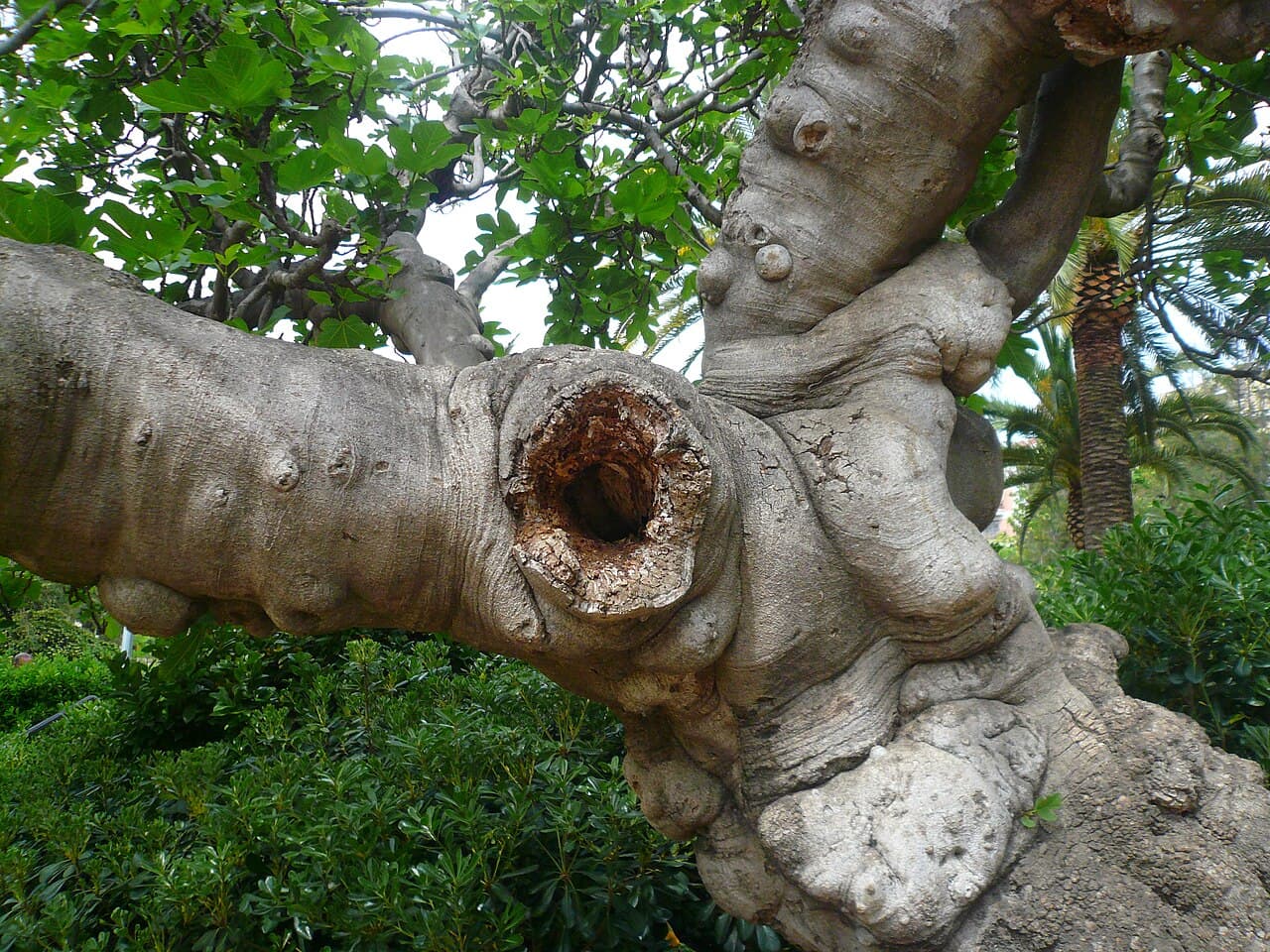
Why Cut Surfaces on Thick Branches Can Be a Problem
Fig branches have a central pith, and the thicker the branch, the wider the cut surface exposed when pruned. If rainwater collects on these exposed surfaces, decay fungi can enter, hollowing out the interior of the branch and potentially leading to dieback or branch breakage later on. The cut surfaces also exude a white latex sap, which can cause skin irritation in some people, so wear gloves when working.
Basic Cutting Positions
- Leave the branch collar (the swollen area at the base of the branch) intact; do not cut flush along the trunk.
- For pruning back, cut at a slant about 1 cm above an outward-facing bud.
- When leaving a branch in place, make the cut so that the cut surface slopes in the same direction as the branch you are keeping.
- If the cut surface faces upward and stays level, rainwater can collect on it, so give it a slight slope.
Safe Procedure for Removing Large Branches
- Make a shallow cut on the underside, about 20 to 30 cm beyond the point where you want to cut.
- Cut from a point slightly further out on the upper side, so the branch does not tear under its own weight.
- Make the final cut on the remaining short stub just outside the swollen base of the branch.
- Smooth the rough saw-cut surface by carefully paring it flat with a sharp pair of pruning shears or a knife.
Cutting deeply in one pass can cause the bark to tear back toward the trunk under the weight of the branch. Always make the cut in three stages: first a shallow undercut from below, then the main cut from above, and finally the finishing cut.
Should Wound Dressings Be Used?
Wound dressing (pruning sealant) is applied to protect the cut surface from rain entry and drying out. It is not necessary for thin branches, but applying it to cuts larger than 3 cm in diameter is a reasonable precaution. As a guideline, apply it immediately after cutting, before the cut surface dries. Applying too thickly may trap moisture inside, so keep the coverage thin, just enough to cover the entire cut surface.
Choosing Not to Use Wound Dressing
Some growers hold that pruning on dry, clear winter days, with cuts kept small, tends to cause few problems even without a wound dressing. The key is to avoid making large cuts. Shaping the tree a little each year, while reviewing the approach to pruning through the year, places a lighter burden on the tree.
Pruning Timing and Tool Sterilization
- Prune thick branches after leaf drop, avoiding the coldest part of winter.
- Avoid rainy days and the period just before extended rain.
- Wipe blades with alcohol or a similar disinfectant before and after each use, and change to a clean blade for each tree.
- Use a fine-toothed pruning saw, and make clean cuts that do not leave the wood frayed.
In cold regions, cut surfaces are prone to freeze damage during the coldest part of winter, so choose the timing to suit your local climate.
Monitoring Cut Surfaces
Pruning is not the end of the process; the wound should also be monitored afterward. If bark rolls over the cut edge and grows inward, healing is progressing normally. Blackening, discoloration, or mushroom-like growth indicates that decay is advancing, and the affected portion should be cut back, removing the entire branch in that area. If you are unsure how to judge the condition, posting photos on the forum to ask other growers about their experience is also a useful approach.
Summary
Pruning cuts on thick branches follow a basic sequence: leave the swollen collar at the branch base intact, make the cut in three stages, smooth the cut surface flat, and apply a thin coat of wound dressing to large cuts. The most effective approach is to avoid needing to cut thick branches at all, by managing the tree while the branches are still young and thin. Tree vigor varies by variety and growing conditions, so treat these steps as general guidelines and adjust them based on how your own tree is performing. For differences in vigor between varieties, the variety guide may also be useful.
Not sure what your fig is?
Post a photo of the leaves and fruit and see what other growers think. "Maybe" is a perfectly good answer here.
Post your figNot going the way you hoped?
Ask other growers on the board. A photo gets you a faster answer.