Fig Protection from Typhoons and Strong Winds | Preventing Branch Breakage and Pot Toppling
Updated: 2026-07-31
Fig harvest season from August to October coincides with typhoon season. Strong winds cause branch breakage, fruit drop, and potted plant overturn, potentially destroying fruit and tree form that have been carefully developed. This article outlines preparations to make before typhoons arrive, measures specific to in-ground and potted plantings, and points to verify after the storm passes.
Preparation to Complete Before Typhoon Season
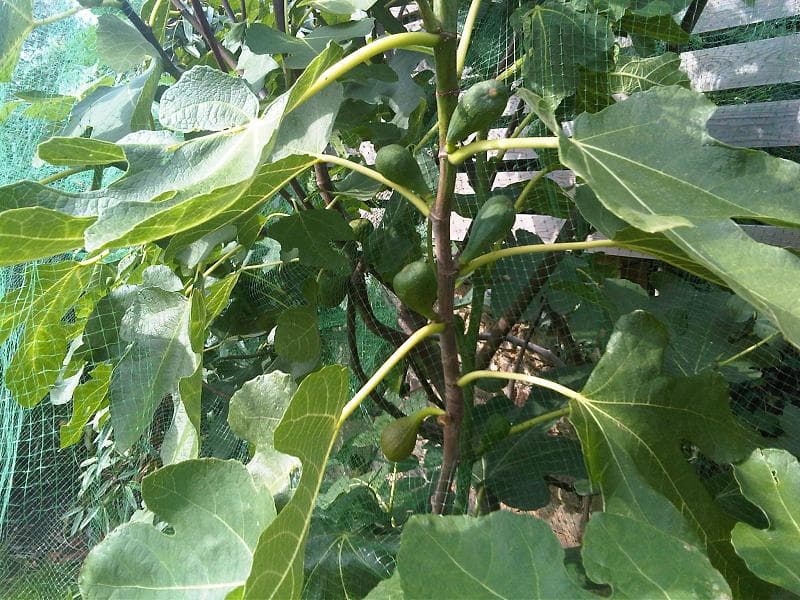
- Remove congested branches and excessive growth lightly, reducing the leaf surface area exposed to wind.
- Inspect supports and training twine for looseness and deterioration, and retie as needed.
- Harvest partially ripened fruit early within reasonable limits to reduce losses from fruit drop.
- Move potted figs in advance to a sheltered location such as against a wall or under an eave to avoid direct wind exposure.
In-Ground Planting — Support Stems and Branches with Stakes and Training
Young trees within several years of planting have thin trunks and are prone to root damage if shaken severely by wind, so secure them firmly with stakes. Even in mature trees, if main branches are being trained and tied, check periodically that the binding points are not rubbed or damaged. For tree forms that extend branches horizontally over a long distance, such as the single-stem espalier style, reinforcing the stakes or trellising with extra thickness provides assurance.
Prevention of Container Tipping
- Tall containers are especially prone to tipping, so position them against building corners or walls near railings where wind exposure is reduced.
- Laying the pot on its side to lower the center of gravity and reduce direct wind exposure is also an effective method.
- Secure pots together with twine, or add weight using bricks or water-filled containers.
- Remove stakes and netting that are prone to being blown away in strong wind, or secure them firmly in place beforehand.
Things to Check After Typhoon Passage
- Cut off broken branches with clean pruning shears, then apply wound dressing to prevent disease entry.
- Address split bark or leaning pots and stakes promptly to avoid prolonged stress on roots and stems.
- Remove fallen fruit and torn leaves, and prevent them from becoming breeding grounds for disease and pests.
- Coastal areas are exposed to salt-laden winds; rinse the leaves with water the following day or later to wash away salt accumulation.
No fig variety is specifically marketed for wind resistance, but varieties such as Violette de Bordeaux that can be kept compact in form tend to be less affected by wind and easier to manage when grown in containers. Masui Dauphine, which has a long track record as a garden tree in Japan, and Chicago Hardy, known for its hardiness, are also trees that withstand typhoons relatively well when properly staked and trained. Differences in tree form and vigor among varieties can be compared in the variety guide, and consulting the forums is also recommended when uncertain about appropriate measures for a particular garden.
The basic approach to typhoon protection involves three stages: reducing the surface area exposed to wind beforehand, securing the support stake and container firmly, and checking for damage to the plant and wound sites promptly after the storm passes. Following these three steps minimizes harvest losses during typhoon season.
Not sure what your fig is?
Post a photo of the leaves and fruit and see what other growers think. "Maybe" is a perfectly good answer here.
Post your figRelated varieties
Not going the way you hoped?
Ask other growers on the board. A photo gets you a faster answer.